Today’s agriculture feels like an exercise in prescription writing. If we pop up a herbicide. If the crop looks yellow, spray a calculated dose of synthetic nitrogen. If an insect type sprays pesticides, it is a reactive system heavily reliant on external, quick-fix inputs.
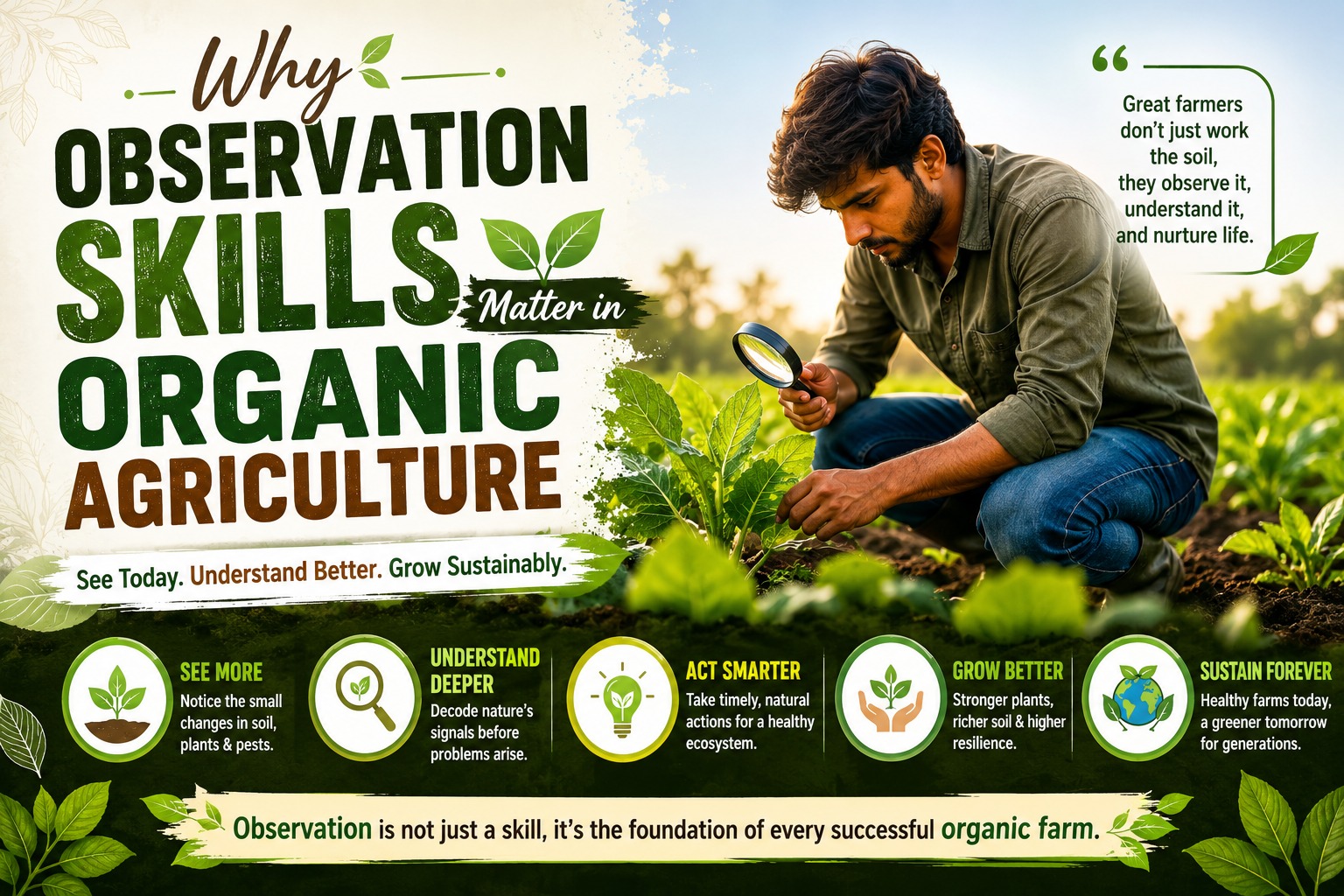
Organic farming is not related to conventional farming, as well as chemical farming; it is a shift towards managing a complex, living ecosystem. In the system, you cannot correct a mistake with a synthetic quick fix. Instead, your primary currency is something much more valuable, sustainable, and entirely free: your power of observation.
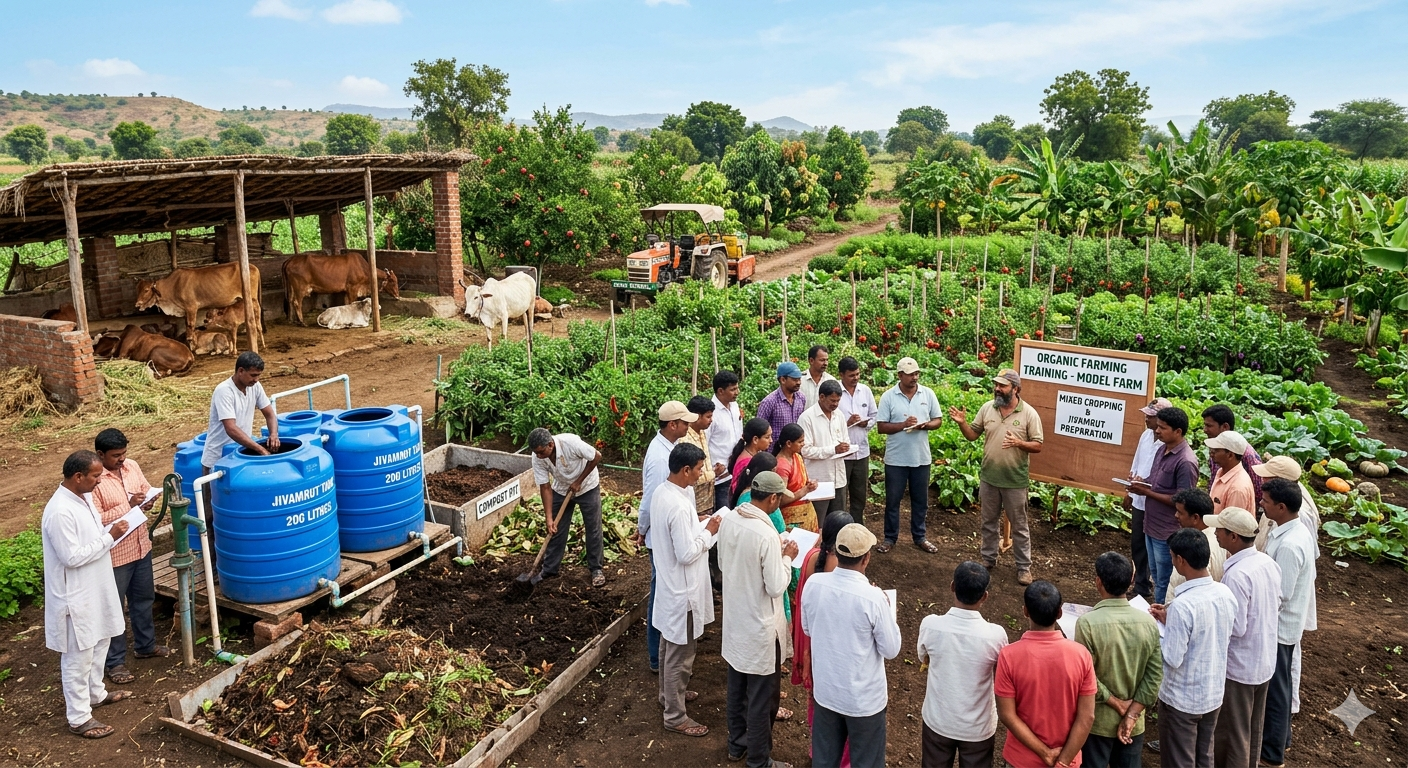
For an organic farmer, keen observation skills are the bedrock of the entire operation. They are the difference between a thriving, biodiverse oasis and a total crop failure. If you also want to learn organic farming connect with the best organic farming training in Nagpur.
What are the fundamentals of the Proactive and Reactive Paradigm?
In the chemical-dependent farming model, the whole process is usually reactive. You wait for a problem to hit an economic threshold, then you spray.
However, organic agriculture depends on sustainableand ecological balance. Because organic remedies like neem oil, biological controls, or row covers are milder and slower than harsh synthetics, they must be used before a pest population explodes.
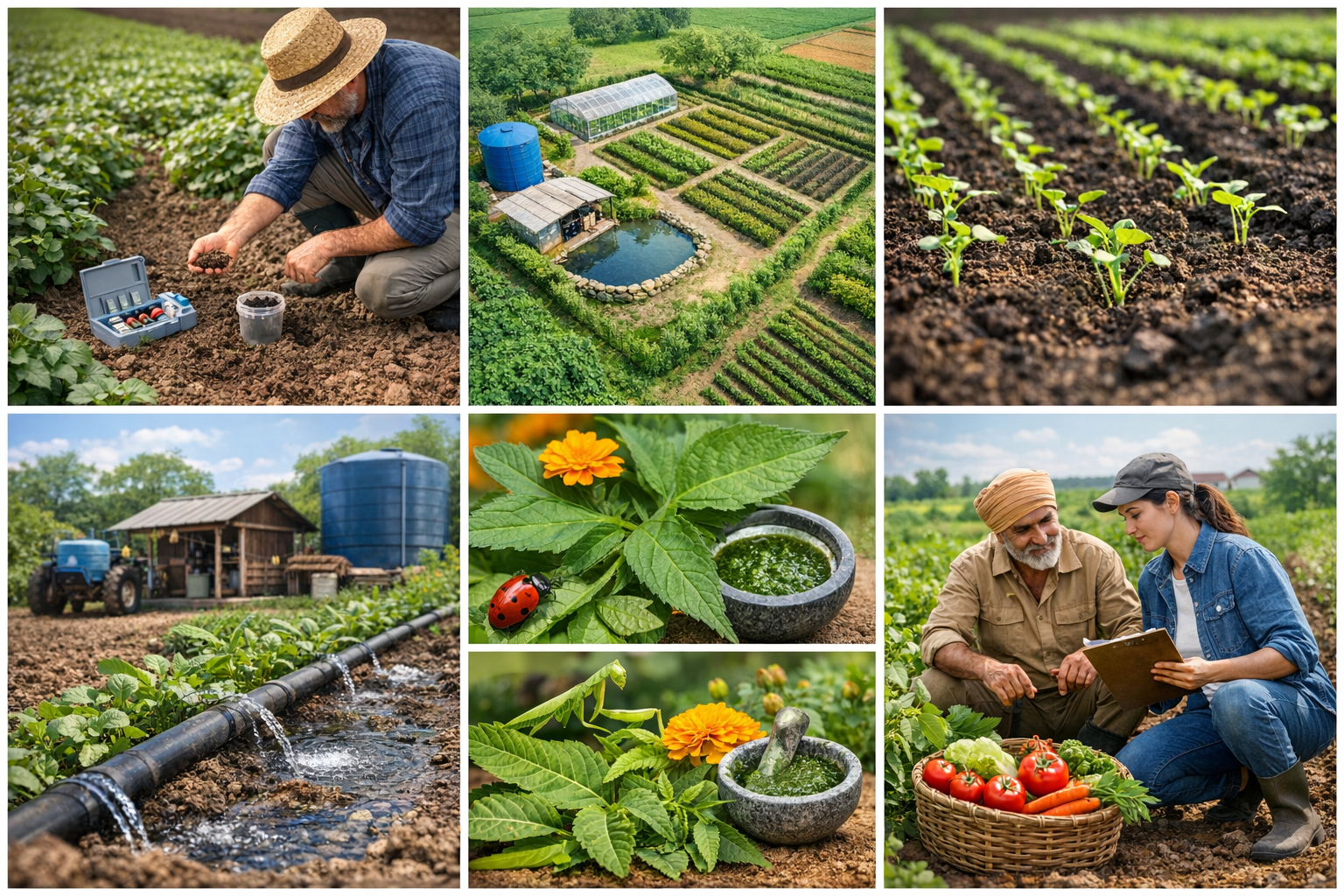
Proactive field observation is the cornerstone of organic farm management. If the pests or diseases are noticed on the day twenty, your crop will be ruined. But if your observation skills are sharp, you will catch the very first sign: a slight curling of a leaf, a shiny patch of sticky honeydew, eating of leaves etc. On day three, you can spray an on farm neem preparation, use of fermented cow urine also effective.
In organic farming, observation transforms you from a firefighter to a strategist.
Decoding the Soil Food Web
To feed the plant is the only important role of organic farming. Highly scared, the organic farmer reads soil like an open book:
The Sight Test
A healthy, carbon-rich soil has a dark brown color, and it looks like a rich chocolate cake. But if the soil looks pale, chalky, or washed out, it is a visual cry for more organic matter. Also, observing how water interacts with the soil is important. The latter points to poor soil structure and low microbial activity.
The Touch Test
When you put your fingers into the Earth, it should crumble effortlessly. This is good tilth—this condition of soil is suitable for planting. If it feels like hard concrete or breaks apart into hard, unyielding clods, it lacks biological glues like glomalin secreted by fungi and bacteria.
The Test of The Smell
A healthy and rich soil contains an earthy and sweet aroma caused by geosmin, a compound produced by soil bacteria called “actinomycetes.” If the soil has a bad smell like rotten eggs or sour milk, it is an alert sign that the soil is lacking oxygen, likely due to waterlogging.
Plants as bio-indicators: listening to the silent cries
An agricultural system, a very minor nutrient deficiency might be ignored at the start, and after some time, it needs to be masked with a liquid fertilizer application.
Look at this plant’s signals of nutritional deficiencies through its leaves:
Nitrogen
General yellowing starts on the older, lower leaves first while the rest of the plants stay light green.
Phosphorus
Leaves take on a distinct, dark green color, often developing dark purple or reddish tints along the margins and veins.
Potassium
The outer edges of the leaves turn brown and dry and look burnt, while the interior remains green.
Iron
The tissue between the leaf veins turns bright yellow, but the veins themselves stay green.
Beyond these issues, observations help you to spot water stress long before permanent wilting points set in. A subtle change in the plantation is the indicator that the crop needs water.
Developing the Farmer’s Eye
You have to develop the skill of observation with years of experience and discipline. If you want to develop these skills, you should focus on these core practices:
Keep a Detailed Farm diary
Human memory is unreliable; write down what you see. Note down all the observations in the field. Diary will become very precise and will have a lot of experience with farming after some years.
Change your perspective.
Don’t just pass by your field. Get down on your hands and knees and look at the plant from ground level to inspect it well. The roots, structure, and condition of the soil can be observed by digging a small hole. These practices will increase your experience in organic farming, and you will see a noticeable change in your skills in some time.
Final Thought
In the world of organic agriculture, your observation skills are the most powerful to possess.
By training yourself to notice each and every change in the plantation you have done, you bridge the gap between being a person who simply grows plants and being a true steward of an ecosystem.
If you like to learn these skills, like such as organic farming training, hands on practical experience, drop a message on the number and email id in contact us page. Our team will share the details shortly based on your requirements and customized training the module.